
Order Holly
Holly: The Perfect Garden Plant
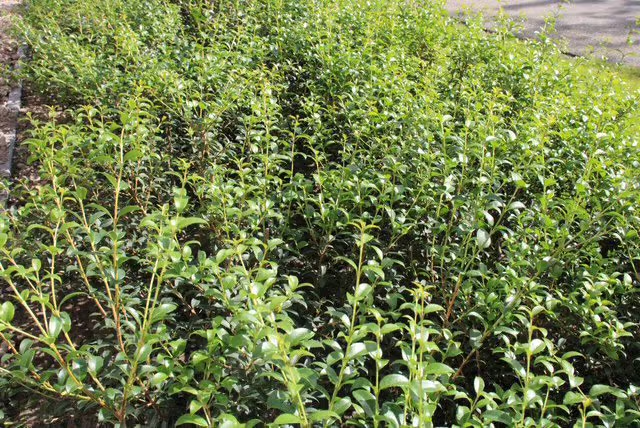
TheOsmanthus is currently extremely popular among gardening enthusiasts, and for good reason. This versatile plant offers numerous benefits and is ideal for a variety of uses in the garden. Whether you want to create a beautiful low hedge or plant a border under a tree or shrub, the Osmanthus is an excellent choice.
One of the main reasons for the Schijnhulst’s popularity is its dense, compact growth habit. This allows you to quickly enjoy privacy and a charming atmosphere in your garden. The Schijnhulst is evergreen, which means it retains its leaves year-round. This ensures a consistently green appearance, even during the winter months.
In the spring, the mock holly comes to life with beautiful white flowers that are not only visually appealing but also give off a delightful fragrance. These fragrant flowers add an extra dimension to the atmosphere in your garden and make it a delight for anyone walking or biking by. The combination of its scent and aesthetic appeal makes the mock orange a must-have for every gardener.
In addition to being used as a hedge, the false holly is perfect for group plantings. Place the plants under a tree or shrub to create a vibrant, green display. Its dense growth and low-maintenance nature make it a practical choice for both experienced gardeners and beginners.
In short, the mock holly is popular not only for its versatility and aesthetic appeal, but also for its fragrant blooms and ease of care. Would you like to enhance your garden with this beautiful plant? Then consider buying a mock holly and discover for yourself the benefits this plant has to offer!
Holly: The Popular Choice for Your Garden
What makes the Schijnhulst so popular?
TheOsmanthus is currently one of the most sought-after hedge plants! There are several reasons for this. This versatile plant is ideal for creating a low hedge or as a groundcover, for example under trees or larger shrubs. With its attractive appearance and fragrant blooms, the Osmanthus is a wonderful addition to any garden.
Enhancing the Atmosphere of Your Garden
In addition to its functional qualities, the mock holly also creates a cozy atmosphere in your garden. In the spring, the plant produces beautiful white flowers that are not only visually appealing but also give off a delightful fragrance. Cyclists and hikers passing by your garden are sure to enjoy the scent and sight of this beautiful hedge.
Characteristics of the Holly Bush
Compact and dense growth habit
The false holly has a compact and dense growth habit, allowing you to quickly enjoy privacy in your garden. This plant is perfect for screening out unwanted views and creating an intimate atmosphere. The false holly remains evergreen year-round, which means you can always enjoy a green setting, no matter the season.
Bloom and Fragrance
In the spring, the Schijnhulst blooms with delicate white flowers that are not only beautiful to look at but also smell wonderful. This fragrance not only attracts positive attention from passersby but also contributes to the overall ambiance of your garden.
Caring for the Holly Bush
Planting the False Holly (
)
When planting the False Holly, it is essential to use Culvita organic potting soil. This special soil gives the plant a “boost” and helps the roots establish themselves better. For optimal growth and flowering, plant the False Holly in a sunny or partially shaded location. In addition, this plant thrives best in well-drained soil.
Fertilizing the
To promote the growth of the Schijnhulst, it is recommended to fertilize the plant twice a year with organic hedge plant fertilizer. This is best done during the periods of April/June and July/August. Spread the fertilizer pellets during dry weather for best results.
Pruning the
If you want to create a neat, box-shaped form or a dense hedge, prune the twice a year: once in the spring (between March and May) and once in the fall (October/November). Pruning the is an easy task; this plant does not have thick stems and does not have thorns.
Benefits of the Holly Bush
- Delightfully fragrant: The flowers give off a pleasant scent.
- Hardy: The plant is highly resistant to cold temperatures.
- Evergreen: Retains its leaves year-round.
- Low-maintenance: This plant requires little care.
- Ideal for low hedges: Perfect for formal planting and creating barriers.
- Compact growth habit: Suitable for smaller gardens or specific planting locations.
Disadvantages of the False Holly
- Limited height: Not suitable for creating tall hedges.
Types:
Buy holly
Are you interested in the Schijnhulst, or would you like to learn more? Feel free to contact us! Our team is ready to provide you with expert advice and show you our extensive selection at the nursery.
Availability: The Schijnhulst is available in various sizes with root balls, starting in mid-September. Make your garden greener and more inviting with this beautiful plant!
Ideal for use as a border plant
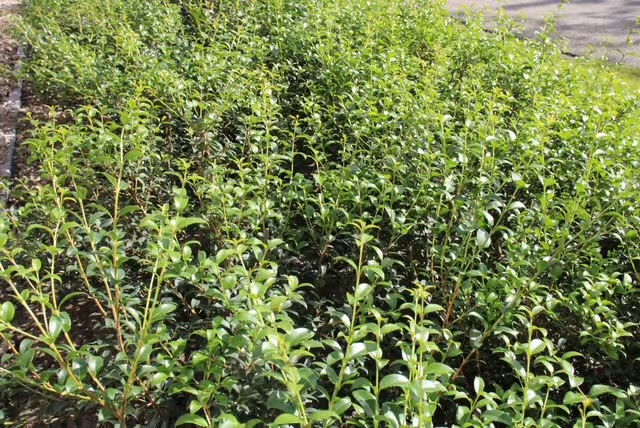
TheOsmanthus is an excellent choice for fill-in planting, and there are several reasons for this. First, this plant has a dense, compact growth habit, which means it quickly creates a full and lush appearance. This makes it ideal for filling empty spaces in the garden—such as under trees or between other plants—where you want to create a green, lively atmosphere.
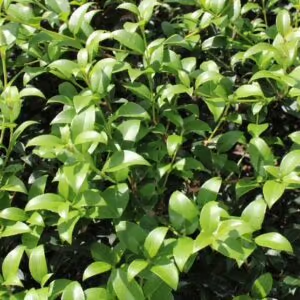
Another advantage of Schijnhulst is that it is evergreen. This means you can enjoy its green appearance all year round, even during the colder months. As a result, your garden remains attractive and vibrant, no matter the season. Its beautiful, glossy leaves add an elegant touch to your garden beds and provide a lovely contrast to other plants.
In addition, the Schijnhulst is low-maintenance. It requires little pruning and can withstand a variety of weather conditions, making it perfect for busy gardeners. Its dense growth also provides natural protection against weeds, so you don’t have to spend as much on maintenance.
Finally, with its fragrant, white flowers in the spring, the mock holly not only adds visual appeal but also a delightful scent to its surroundings. This makes it not only a practical but also an aesthetic choice for border planting in any garden.
Frequently Asked Questions About Schijnhulst
-
Osmanthus, also known as false holly, is an evergreen shrub native to East Asia. This plant is popular in European gardens because of its dense, compact growth and attractive glossy leaves. Osmanthus is often used as a hedge plant, but it is also excellent for border planting or as a groundcover. The combination of its aesthetic value and ease of care makes it a favorite among gardening enthusiasts.
-
The false holly has a number of unique characteristics that make it an ideal hedge plant:
- Dense Growth: The plant grows compactly and has a dense structure, providing privacy and a beautiful view in your garden.
- Evergreen: This plant retains its leaves year-round, adding a touch of green to the landscape in every season.
- Flowering: In the spring, small, white flowers appear that smell wonderful and add an extra touch to your garden.
- Size: The holly grows slowly and can reach a height of between 1 and 2 meters, depending on pruning and care techniques.
These characteristics make the holly a versatile and attractive choice for various garden designs.
-
When planting holly, there are a few important steps to follow:
- Soil type: Use Culvita organic potting soil to give the plant a good start. This helps the roots establish themselves better.
- Location: The Schijnhulst thrives best in full sun or partial shade. Make sure the soil is well-drained to prevent root rot.
- Fertilization: Fertilize the plant twice a year with organic hedge plant fertilizer, preferably in April/June and July/August. This ensures optimal growth.
- Pruning: Prune the holly twice a year (in the spring and fall) to maintain a neat, tidy hedge. Pruning is easy because the plant has no thorns and no thick branches.
By following these care tips, you can enjoy a healthy and beautiful holly for many years to come.
-
Yes, the false holly is perfect for small gardens! Thanks to its compact growth habit and dense structure, this plant works well in limited spaces. You can use it to create low hedges, partitions, or accent plantings. Furthermore, the Schijnhulst’s slow growth is an advantage; you don’t have to prune it often, which makes maintenance easy. This makes it an ideal choice for both urban and rural gardens.
-
Holly has several advantages over other hedge plants:
- Scent: The fragrant flowers that bloom in the spring are a unique feature that not all hedge plants have.
- Evergreen: While many plants lose their leaves in the winter, the holly remains green all year round, making for an attractive garden.
- Low-maintenance: The holly requires little maintenance compared to other hedge plants, making it a time-saving choice for busy gardeners.
- Ecological value: The plant provides shelter for birds and other animals, which promotes biodiversity in your garden.
Thanks to these benefits, Schijnhulst is an excellent choice for both aesthetic and functional purposes in your garden.
-
The ideal time to plant false holly is in the spring or fall. In the spring, from March through May, the plants have a chance to grow well before the summer heat sets in. In the fall, from September through October, they can also become well-established before winter sets in. It’s important to avoid planting Schijnhulst during extreme heat or frost, as this can hinder root development. By planting during these periods, you give the Schijnhulst the best chance for healthy growth.
-
Holly is generally a hardy plant, but it can sometimes be affected by pests such as aphids or fungi. Here are a few tips to keep your holly healthy:
- Regular Inspection: Check your plants regularly for signs of pests or diseases. Early intervention can prevent further damage.
- Biological Control: Use natural predators, such as ladybugs, to control aphids. This is an effective and environmentally friendly method.
- Pruning: Remove dead or diseased branches to improve air circulation and reduce the risk of fungal diseases.
- Proper Care: Make sure they have enough water and nutrients. Strong, healthy plants are less susceptible to diseases and pests.
By following these tips, you can keep your holly healthy and enjoy a beautiful hedge.
-
Yes, Schijnhulst can thrive in both full sun and partial shade. Although it grows best with plenty of sunlight, it can also be planted in shady areas. This makes it an excellent choice for spots where other plants struggle to grow. Keep in mind that growth may be slightly slower in shady conditions. Make sure the soil is well-drained so the plant stays healthy.
-
How often you should water your plants depends on various factors, such as the time of year, weather conditions, and soil type. Here are some guidelines:
- Newly Planted: Newly planted trees need more water, especially during the first few months. Water them regularly, especially during dry spells.
- Mature Plants: Once the holly is well-established, it needs to be watered less frequently. As a general rule, once a week is sufficient, unless the weather is very dry.
- Soil Check: Always check the soil's moisture level. If the top layer feels dry, it's time to water the plant.
-
Yes, Schijnhulst is particularly well-suited for urban environments! The plant is well-adapted to a variety of conditions and can tolerate pollution and limited space. This makes it an ideal choice for city gardens, balconies, and courtyards. Be sure to give the plant enough space and pay attention to its watering needs, especially in paved areas.