Taxus baccata
starting at € 2,95
Ordering Options:
Personal advice
Choose your own delivery date
Free shipping on orders of €750 or more
Top quality from our own nursery

Features
- Very hardy
- Can be pruned back to the bare wood
- Low maintenance
- Rock-solid
- Can be pruned into various shapes
- Can live to a very old age
- The needles and berries are poisonous
- Susceptible to prolonged drought
Order these items at the same time:
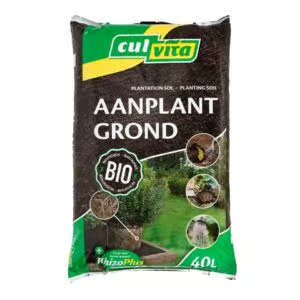
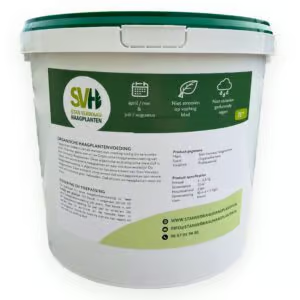
Taxus baccata
15–20 cm
5 plants per month
In a pot
Price per item:
25+
2.95
100+
2.49
200+
2.25
Taxus baccata
30–40 cm
5 plants per month
In a pot
Price per item:
25+
3.50
100+
3.25
200+
2.95
Taxus baccata
40–60 cm
4 plants per month
In a pot
Price per item:
25+
6.95
50+
6.50
100+
5.95
200+
5.50

Taxus baccata
60–80 cm
3 plants per month
Root ball
Price per item:
10+
12.50
50+
11.95
100+
11.50
200+
10.95

Taxus baccata
80–100 cm
3 plants per month
Root ball
Price per item:
10+
14.95
50+
14.25
100+
13.50
200+
12.50

Taxus baccata
100–125 cm
2.5 plants per month
Root ball
Price per item:
10+
19.95
50+
18.95
100+
17.95
200+
16.95
Taxus baccata
125–150 cm
2.5 plants per month
Root ball
Price per item:
10+
24.95
50+
23.95
100+
22.50
200+
20.95
Taxus baccata
150–175 cm
2 plants per month
Root ball
Price per item:
10+
37.50
25+
36.50
50+
34.95
100+
32.50
200+
29.95
Specifications

Full name
Taxus baccata

Maximum height as a hedge
300 cm

Maintenance
Minimal

Groei per jaar
Langzaam, < 20cm per jaar

Pruning
Once a year

Hardy
Very good

Evergreen
Yes

Location
Sun, partial shade, shade

Growth habit
Broad, upright
Reviews
We ordered 1,500 yew seedlings at the end of February last year. It was a bit nerve-wracking after the snow and frost. They were delivered to us, and we planted them that same week. Except for 20 of them, all the yews are looking exceptionally healthy. So that’s great! We’re very satisfied with this purchase. We highly recommend buying from here!
Desiree Leenders
March 24, 2022

⭐⭐⭐⭐⭐ Absolutely top quality—highly recommended!
We are absolutely thrilled with our beautiful Genolia hedge plants! The quality is outstanding and even exceeded our expectations. From our first contact to delivery, everything went perfectly. Stan was incredibly friendly, helpful, and reliable throughout the entire process. The driver was also exceptionally nice and even helped us unload.
Here, the quality, service, and customer care are simply 100% spot on!
We are overjoyed and would order from here again in a heartbeat. A truly heartfelt recommendation and a well-deserved 5 stars! 🌿
Marco Oelling (Germany)
October 19, 2026
The delivery was excellent, on time, and reliable. The yew trees delivered are of outstanding quality—healthy, strong, and exactly as described. It’s immediately clear that great emphasis is placed on high-quality plants and excellent service. I am completely satisfied and can wholeheartedly recommend this seller. Thank you very much!
Philip G. (Germany)
October 15, 2026
Great experience! Fast service, honest and clear advice—everything was handled perfectly!
Lars Stensen
October 6, 2026
They helped me come up with ideas and offered advice. Great product and great service. Highly recommended.
Thijs Smeets
September 26, 2026
A really great company—the service and quality are outstanding. I can recommend it to everyone.
Robert Jan van den Heuvel
September 26, 2026
I stopped by SVH for advice on hedge plants. Stan really takes the time to figure out which types of hedges are right for you and gives you great advice. In the end, we chose Prunus Elly. It was delivered quickly, and upon delivery, they explained step by step how to plant it. We’re very satisfied!
Rowen Keurentjes
September 21, 2026
It was a pleasure working with you, Stan. Thanks for the lovely laurel wreath and great service!
Arjan Broer
June 15, 2026
Super beautiful plants that more than lived up to what was promised on the website—they were both taller and more beautiful. Superb customer service with quick answers to questions. Fast delivery of the plants to Denmark (don't be afraid to make a bank transfer—you won't get scammed here). The plants are growing fantastically
Thanks, Stan
Lars Mikkelsen (Denmark)
June 3, 2026
We’re very pleased with this nursery! We received a beautiful proprietary variety: the Laurier ‘Elly’. The plants were of good quality, nice and full, and healthy. You can tell right away that they’re grown with a great deal of expertise and care.
In addition, the service was friendly and professional. Everything was delivered neatly, and they kept their promises. We are very happy with the results in our garden and can definitely recommend this nursery to anyone looking for high-quality plants and expert advice.
Pascalle Menting
May 13, 2026
Taxus baccata
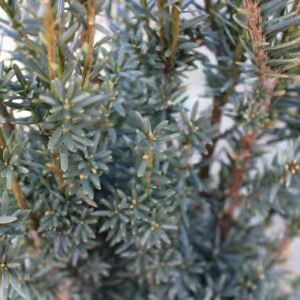
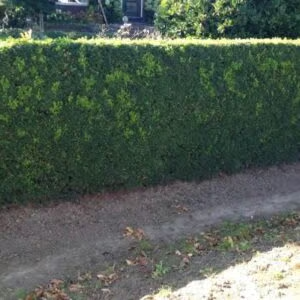
Taxus baccata, also known as the yew, is a classic hedge plant. There are, in fact, several reasons why it is the most commonly planted conifer!
The advantage of this plant is that theyewrequires little maintenance. This variety grows a maximum of 20 cm per year and therefore only needs to be pruned once a year. The best time to prune your hedge is in the spring (March through May) or in the fall (September through November). An added benefit is that you won’t have much pruning waste from the Taxus baccata. That saves you a lot of cleanup work!
In addition, the baccata can be planted just about anywhere. In the middle of the city? Right in the sun? Or perhaps in a remote village? None of this is a problem for this plant! This variety grows everywhere.
The difference between the baccata and other Taxus species is that this species grows slightly wider. The advantage of this is that your hedge will become dense much sooner.
A great place to plant a slow-growing hedge is, for example, in the front yard. This gives you a boundary for your property while also allowing you to enjoy the view.
Are you looking for a hedge that grows faster? Then a laurel might be a good alternative. The‘Elly’ laureland Laurel ‘Novita’ are excellent choices!
FAQ
-
Taxus baccata has a slow growth rate and grows up to 20 cm per year. This means it grows relatively slowly compared to other hedges. This slow growth makes it easy to keep the plant in shape, making it ideal for creating structured hedges.
-
Taxus baccata thrives best in well-drained soil and can be planted in full sun or partial shade. It is important to keep the soil moist but not waterlogged. This plant is also tolerant of various soil types, making it a versatile choice for a variety of gardens.
-
Yes, Taxus baccata is poisonous to both humans and animals. However, it is very unusual for humans or animals to eat this plant. That’s because the berries taste really bad.
-
It is recommended to prune Taxus baccata annually, preferably in the spring or early summer. This helps maintain a nice, compact shape and encourages the growth of new shoots. Pruning also improves air circulation, which contributes to the plant’s overall health.
-
Taxus baccata requires regular watering, especially during dry periods. Fertilizing in the spring with Stan Verwaaij Haagplanten’s Organic Hedge Plant Fertilizer helps the plant grow and stay healthy. Also, check regularly for pests and diseases, although Taxus baccata is generally resistant to common garden problems.
-
Taxus baccata has a remarkably long lifespan and can live for hundreds of years under the right conditions. This makes the yew a valuable addition to any garden. Many yews are passed down from generation to generation.
-
Yes, Taxus baccata is very well suited for low hedges. With regular pruning, the plant can be kept compact. This makes it ideal for creating structured, green barriers without it growing too tall
-
The best time to plant Taxus baccata is in the spring or early fall. During these periods, the weather is mild and soil conditions are ideal for root growth. This helps the plant become well-established before winter sets in.
-
In winter, Taxus baccata requires little care, but it is important to protect the plant from extreme cold and frost. This can be done, for example, by draping a cloth or tarp over the hedge.
-
Taxus baccata is fairly drought-tolerant, but young plants need to be watered regularly during dry periods. Once the plant is well-established, it can handle drought better, but it’s always a good idea to water it more frequently in the summer.