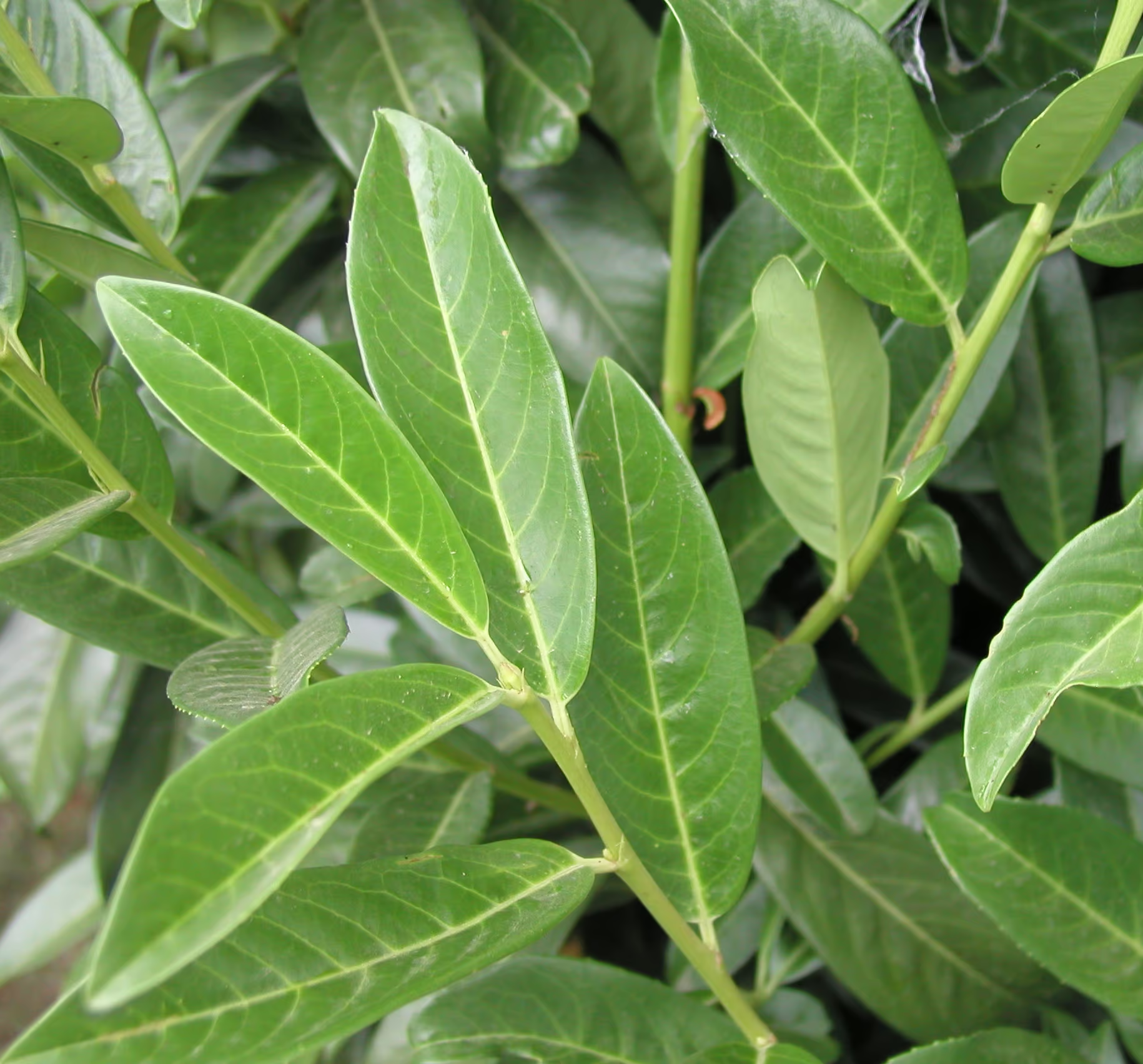
A laurel hedge provides privacy year-round and remains evergreen. But which variety is best suited for your garden? Bay laurel ‘Bonaparte,’ ‘Elly,’ ‘Rotundifolia,’ and ‘Genolia’ are all evergreen, but they differ significantly in growth habit, foliage, and appearance. For example, ‘Genolia’ is suitable for a narrow hedge, while ‘Rotundifolia’ grows quickly in both width and height. In this comparison, you’ll learn which laurel variety meets your needs.
The Differences at a Glance
- Bay laurel ‘Bonaparte’: compact growth and striking young foliage with a bronze sheen.
- Bay laurel ‘Elly’: narrow and compact, extremely hardy, and suitable for a variety of gardens.
- Bay Laurel ‘Rotundifolia’: large leaves and vigorous, broad growth, making it ideal for a full hedge.
- Bay laurel ‘Genolia’: slender, upright growth; a good choice if you have limited space.
All four varieties can grow into a dense, evergreen hedge. The best choice depends mainly on the available space, the desired appearance, and how much maintenance you’re comfortable with.
Bay Laurel ‘Bonaparte’: compact with bronze leaves
Bay laurel ‘Bonaparte’ is an excellent choice if you want a compact hedge with just a little extra color. The young leaves have a bronze sheen. Later, they turn green, creating a beautiful color contrast in the hedge in the spring. The plant grows upright and compact, making it well-suited for a well-maintained hedge.
“Bonaparte” is evergreen and grows at a moderate rate, about 20 to 40 cm per year. This variety is also known for its good cold hardiness and robust nature. That makes it an attractive choice for anyone looking for a sturdy hedge that adds structure to the garden year-round. Depending on the shape you want, pruning once or twice a year is usually sufficient.
Choose ‘Bonaparte’ if you’re looking for a compact laurel hedge that’s not only green but also has a subtle bronze tint in the spring.
Bay Laurel ‘Elly’: Compact, Hardy, and Versatile
The ‘Elly’ bay laurel grows upward in a narrow, compact shape. As a result, this variety takes up less space than a bay laurel that spreads out widely. That makes ‘Elly’ a practical choice for smaller gardens or areas where you want privacy but don’t have much space for a hedge.
“Elly” is a variety developed by our nursery. The plant is known for its extreme hardiness and can resume healthy growth after periods of drought. Like the other varieties in this comparison, “Elly” is evergreen and suitable for a spot in full sun, partial shade, or full shade. Thanks to its rapid growth of 40 to 60 cm per year, you’ll have a full hedge relatively quickly. Keep in mind, however, that a fast-growing hedge requires regular attention: pruning it once or twice a year will help you keep it neatly shaped.
Choose " Elly" if you want a narrow, compact hedge that is sturdy and fits well in many gardens.
Bay Laurel ‘Rotundifolia’: Grows quickly into a wide, full hedge
“Rotundifolia”is a well-known variety of laurel with large, broad leaves. The plant grows quickly and forms a bushy habit, allowing you to easily create a tall, full hedge. Do you have a spacious garden, and would you like your hedge to be a bit wider? If so, “Rotundifolia” might be just what you’re looking for.
However, its vigorous growth does require space and regular pruning. To keep the hedge nicely shaped, pruning twice a year is a practical guideline. Compared to the compact ‘Bonaparte’ and ‘Elly,’ ‘Rotundifolia’ is less suitable if you want to keep the hedge narrow. According to our product specifications, this variety is also less hardy and more susceptible to plant diseases than the other three varieties in this comparison.
Choose ‘Rotundifolia’ if you’re primarily looking for a fast-growing, wide hedge with large leaves and have enough space for the plant to grow.
Bay Laurel ‘Genolia’: ideal for a narrow hedge
Would you like a tall hedge, but have limited width? Then the ‘Genolia’ laurel is worth considering. This variety grows narrow and upright, making it suitable for a neat hedge along a driveway, property line, or in a smaller garden. Despite its slender growth habit, ‘Genolia’ can grow tall quickly.
“Genolia” is evergreen and can be planted in a variety of locations, from full sun to shade. Prune the hedge once or twice a year to maintain its shape. Due to its compact growth habit, the hedge remains relatively narrow, but regular pruning helps keep it neat and dense.
Choose " Genolia" if you want a narrow, tall hedge and cannot or do not want to plant a wide hedge.
Which bay laurel is best for your garden?
There isn't a single type of laurel that's the best choice for every garden. First, consider the available space, and then decide what look you're going for:
- Short on width? Choose “Genolia” or “Elly.”
- Looking for a compact hedge with striking young foliage? Choose “Bonaparte.”
- A broad, full hedge with large leaves? Choose “Rotundifolia.”
- Looking for a sturdy, compact hedge that can thrive in a variety of conditions? Check out “Elly” or “Bonaparte.”
Also consider the desired height. All four species can form a tall hedge, but the maximum height varies by species and depends in part on how they are pruned. Furthermore, a hedge that you want to keep narrow requires a different approach than a wide, natural property boundary.
Planting and Maintaining a Bay Laurel Hedge
A good start helps your laurel hedge take root properly. Water young plants thoroughly after planting, especially during dry spells. This is important while the roots are still developing. After that, you can adjust your watering schedule based on the weather and soil conditions.
It’s best to trim your laurel hedge with pruning shears. This prevents many of the large leaves from being cut in half and developing brown edges. One or two trimmings per year are usually enough to keep the hedge in good shape. The exact frequency depends on the growth rate and how neat you want to keep the hedge.
Also, keep in mind that bay leaves and berries are poisonous. Therefore, keep prunings and fallen plant parts out of the reach of children and pets.
Conclusion: Choose a laurel that suits the space!
When comparing the laurel varieties ‘Bonaparte,’ ‘Elly,’ ‘Rotundifolia,’ and ‘Genolia,’ the main consideration is their growth habit. “Rotundifolia” is the logical choice for a wide, fast-growing hedge. “Genolia” and “Elly” are suitable for a narrow hedge, while “Bonaparte” combines compact growth with a bronze hue in its young foliage.
So start by measuring the space and determining how tall and wide the hedge can be. That way, you’ll choose not only a laurel that looks beautiful, but also a variety that suits your garden and your maintenance needs. At Stan Verwaaij Haagplanten, we grow varieties such as “Bonaparte” and “Elly” ourselves, and we’re happy to help you choose the right hedge plant.
 Stan Verwaaij