A hedge is more than just a green boundary. The right hedge plant provides privacy, shelter from the wind, and can give your garden a beautiful look. But which hedge plant is best suited to your situation? That depends on the available space, the desired height, the amount of maintenance required, and the look you’re after.
The Stan Verwaaij Hedge Plants selection includes various types of evergreen and semi-evergreen hedge plants. In this blog, we’ll guide you step by step through the process of making the right choice.
What should you look for when choosing a hedge plant?
Before choosing a hedge plant, it's important to consider a few practical factors:
- How much space is available?
- Should the hedge be evergreen?
- How tall should the hedge be?
- How quickly should the hedge grow together?
- How often do you want to prune?
- What style suits your garden?
- Is the hedge in the sun, partial shade, or shade?
- What type of soil is in your yard?
For example, a narrow city garden calls for a different type of hedge than a spacious rural garden. There is also a difference between a neat, formal hedge and a natural-looking boundary hedge.
Bay Laurel: A Dense, Green Hedge in No Time
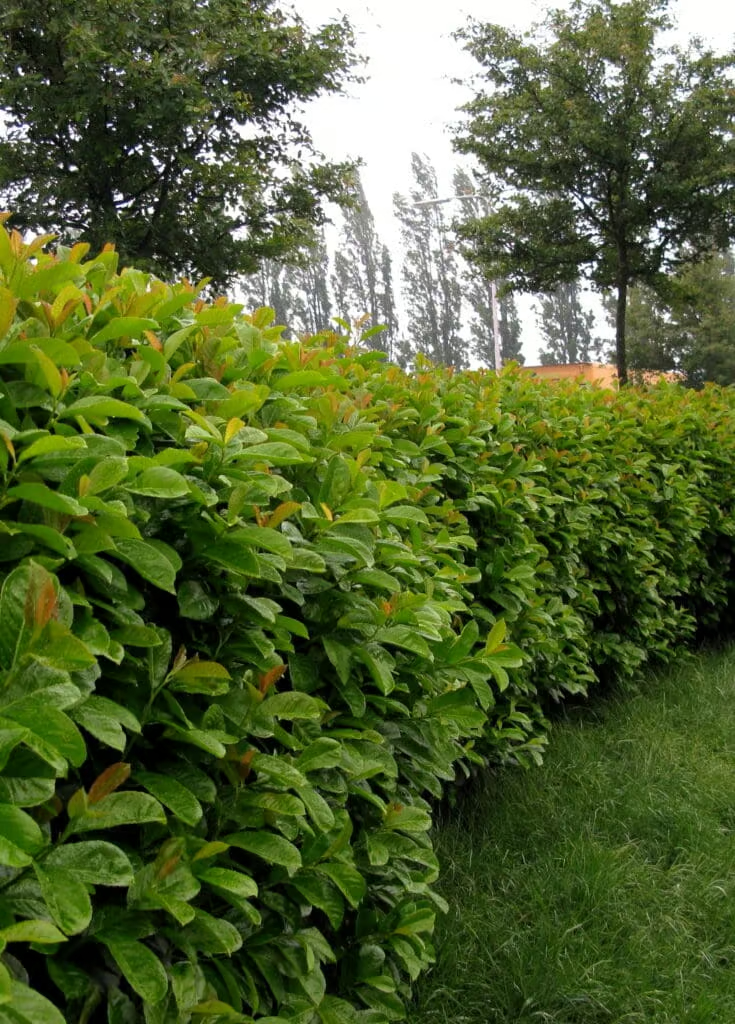
Want to create privacy quickly? Then a laurel hedge is an excellent choice. A laurel has large, glossy leaves and grows into a dense, green wall. This makes it a popular choice for property boundaries and as a screen against prying eyes and wind.
Stan Verwaaij Haagplanten’s product line includes various types of laurel, including: ‘Elly, ’ ‘Bonaparte, ’ ‘Caucasica, ’ ‘Etna, ’ ‘Genolia, ’ ‘Novita, ’ ‘Rotundifolia,’ and Portuguese laurel.
Bay Laurel ‘Elly’ is a unique, proprietary variety developed by the nursery. This variety is known for its compact growth habit, rapid growth, and good cold hardiness. In my opinion, ‘Elly’ has many qualities that are important for a good hedge plant: it grows quickly into a dense hedge, remains compact, is very cold-hardy, and is resistant to disease.
Laurier ‘Bonaparte’ is another striking variety at our nursery. Its young leaves have a warm bronze glow, which adds extra color to the hedge in the spring. In 2020, this variety won a medal for Best Newcomer at Europe’s largest tree nursery trade show.
Choose bay leaves if you:
- want a dense hedge quickly
- wants a lot of privacy
- I want an evergreen hedge
- I want a hedge that grows quickly
Yew: stylish, sturdy, and low-maintenance
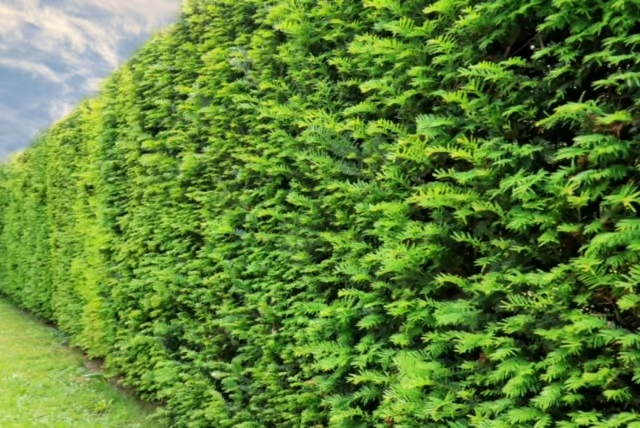
A yew hedge is a good choice for anyone looking for a formal and timeless look. Yew stays green all year round, grows slowly, and can live for a very long time. The dark green needles give the hedge a calm, elegant appearance that complements modern, classic, and rustic gardens.
Yew grows more slowly than, for example, privet or bay laurel. That means you’ll need a little more patience before the hedge is fully dense. On the other hand, the plant requires relatively little maintenance. One pruning session per year is usually enough to keep the hedge neatly shaped. This makes the yew ideal for planting in the front yard, for example. This way, you can still create a boundary for your property, but you can easily see over the hedge, so you don’t lose your view.
In addition, yew tends to sprout new growth from older wood, which means that a hedge that has grown too large can often be pruned back heavily.
Choose yew if you:
- want a neat, formal hedge
- values a long service life
- want minimal pruning
- want a dense, dark green hedge all year round
Japanese holly: a strong alternative to boxwood
Japanese holly, also known as Ilex, has small, delicate leaves. This makes the plant resemble boxwood and makes it suitable for neat shapes and low- to medium-height hedges. The main advantage of Japanese holly is that this species is not susceptible to boxwood diseases.
The Stan Verwaaij Hedge Plants selection includes the Japanese holly ‘Kanehirae’. This hedge plant is well-suited for a modern garden, front yard, or ornamental garden where a well-maintained, compact hedge is desired.
Choose Japanese holly if you:
- is looking for a boxwood-like appearance
- want a low or medium-height hedge
- likes a fine leaf structure
- have a sleek garden with clean lines
Glossy Privet: A Hedge with Striking Color
Would you prefer something special instead of a regular green hedge? Then the Japanese spindle tree is an interesting choice. This evergreen hedge plant produces fresh red new growth, which later turns green. This adds extra color to your garden in the spring and summer.
Pygmy holly is especially suitable for people who want a hedge that is not only functional but also serves a decorative purpose. The plant looks great as a property boundary, but also as a backdrop for a flower border.
Stan Verwaaij’s selection of hedge plants includes two different varieties of photinia: “Red Robin” and “Robusta Compacta.” But which variety should you choose? The “Robusta Compacta” grows slightly slower and more compactly than the “Red Robin.” If you want your hedge to grow up to 150 cm, “Robusta Compacta” is the best choice. If you’d like a taller hedge in your garden, “Red Robin” is the better option.
Choose a glossy medlar if you:
- want to add color to your hedge
- looking for a striking look for your garden
- likes an evergreen plant with red young leaves
- want to combine a hedge with ornamental grasses, perennials, or trees.
Privet: affordable and fast-growing
The privet hedge is a practical choice for a long property boundary. Privet grows quickly, is generally affordable, and is forgiving of pruning mistakes. The plant is semi-evergreen: during a mild winter, it retains much of its foliage, but in severe frost, the privet may lose some of its leaves.
That's why privet is especially suitable if you want a green barrier quickly but don't mind if the hedge becomes a little sparser in the winter. Because privet grows quickly, you'll need to prune it several times a year.
An additional advantage of privet is that, compared to most other hedge plants, it is a bit less expensive.
Choose privet if you:
- want to plant a long hedge
- considers quick results important
- have a limited budget
- doesn't mind pruning regularly
Olive willow: sturdy and ideal for a natural hedge
The olive willow is a hardy, evergreen hedge plant with narrow, gray-green leaves. The light underside of the leaves creates a subtle color contrast and gives the hedge a natural look. Olive willow is highly resistant to wind and sea breezes, making it suitable for gardens in open locations.
This hedge plant is well-suited to a rustic, Mediterranean, or modern garden. Thanks to its dense growth, the olive willow also provides privacy and shelter. The plant can be pruned regularly, but it also looks beautiful when you let the hedge grow in a looser, more natural style.
Choose olive willow if you:
- Looking for an evergreen hedge with foliage in various colors
- likes a natural or Mediterranean look
- you need a hardy hedge plant for a windy location (such as by the sea)
- want to create privacy and shelter.
Ilex ‘Green Spire’: compact and sleek
Spindle Tree ‘Green Spire’ is a compact, evergreen hedge plant with small, dark green leaves. Thanks to its narrow, upright growth habit, this variety is well-suited for smaller gardens, front yards, and areas where space is limited.
The plant responds well to pruning and is therefore suitable for a neat, well-maintained hedge. The “Green Spire” spindle tree can be used as a low- to medium-height property boundary, as well as a green border around a flower bed, patio, or path.
In practice, we see that the “Green Spire” is often used as an alternative to boxwood. This is because the leaves of this variety resemble those of boxwood. The main advantage of the spindle tree is that it is not susceptible to boxwood diseases and has a more attractive, compact growth habit.
Choose the ‘Green Spire’ Cardinal’s Hat if you:
- you don't have much room for a wide hedge
- want a compact, evergreen hedge
- is looking for a sleek look
- is looking for an alternative to boxwood
- you want to plant a hedge along a patio, path, or flower bed.
Which hedge plant is right for your garden?
In a nutshell:
- Bay laurel: grows quickly, offers plenty of privacy, and has large leaves.
- Yew: elegant, evergreen, and low-maintenance.
- Japanese holly: delicate leaves and a good alternative to boxwood.
- Glossy privet: striking red young leaves and extra color.
- Privet: fast-growing, affordable, and practical.
- Olive willow: gray-green leaves and a natural look.
- Cardinal's Hat: compact, neat, and suitable for smaller spaces.
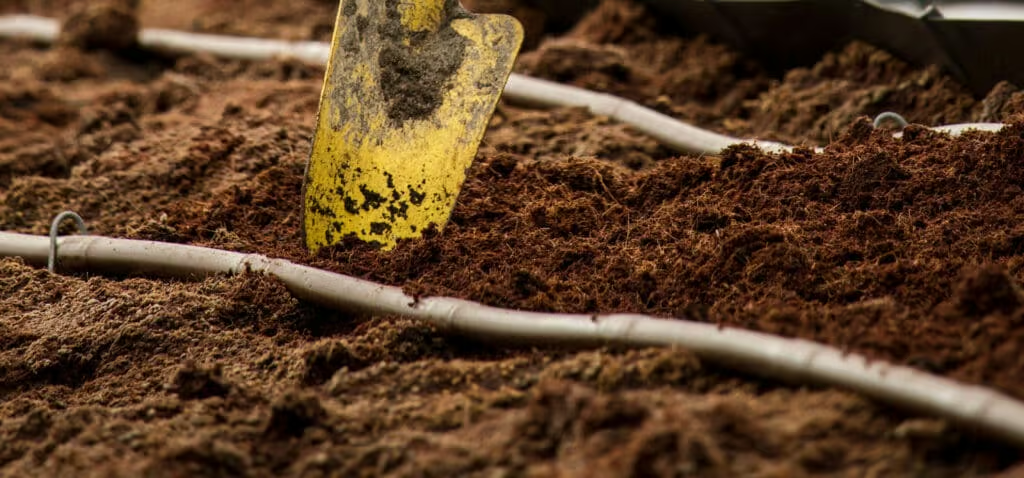
Proper planting is also important. The soil must contain sufficient nutrients, and the plants need plenty of water after planting. Stan Verwaaij recommends, among other things, organic potting soil and organic hedge plant fertilizer. When you place an order, you’ll also receive a step-by-step guide for planting and caring for your hedge.
Are you still unsure which variety to choose? If so, please contact Stan Verwaaij Haagplanten for personalized advice. From our nursery in Ottersum, we’d be happy to help you find the hedge plant that best suits your garden, preferences, and available space.

 Stan Verwaaij